Once upon a silver mine, somewhere between yesterday and tomorrow...
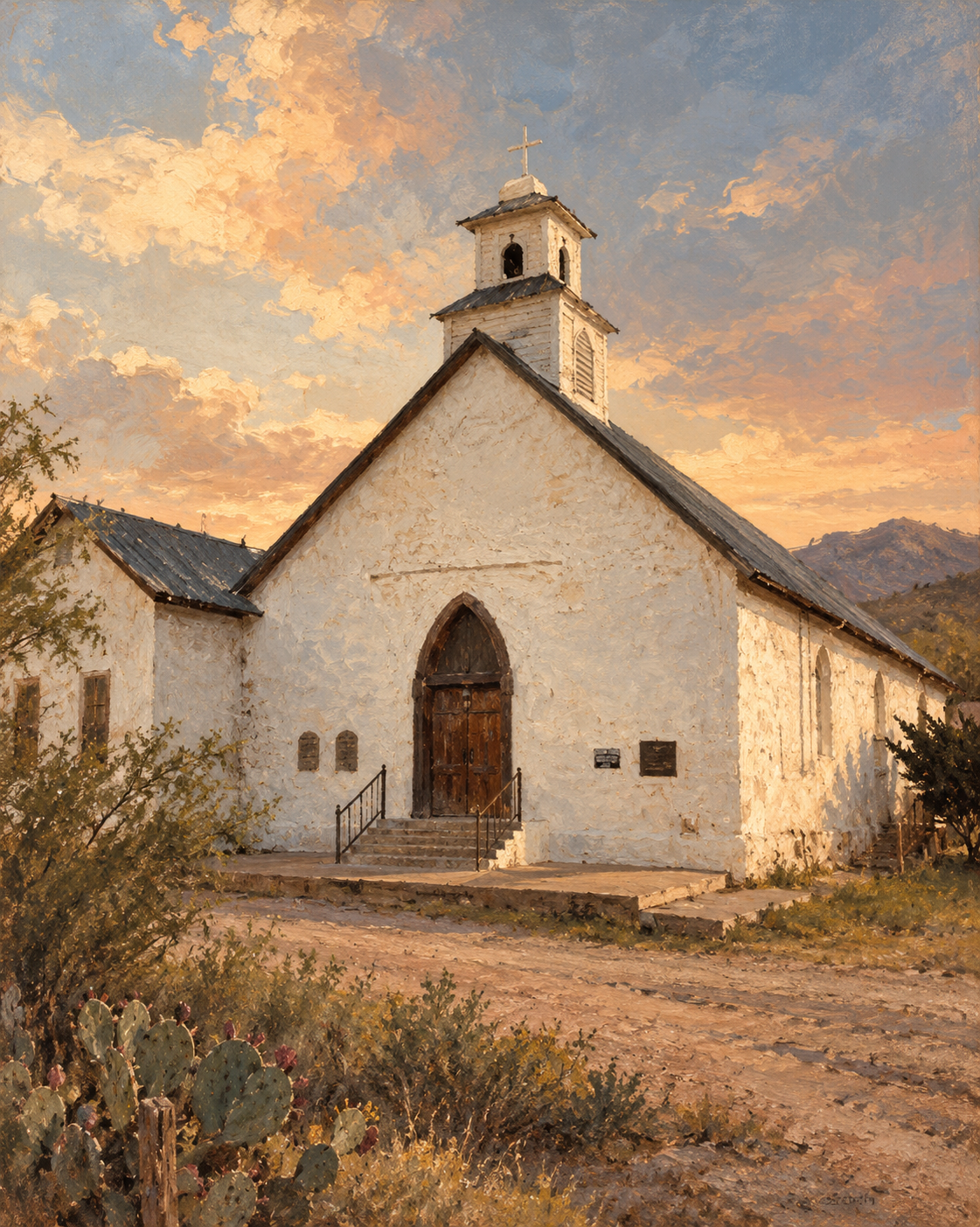
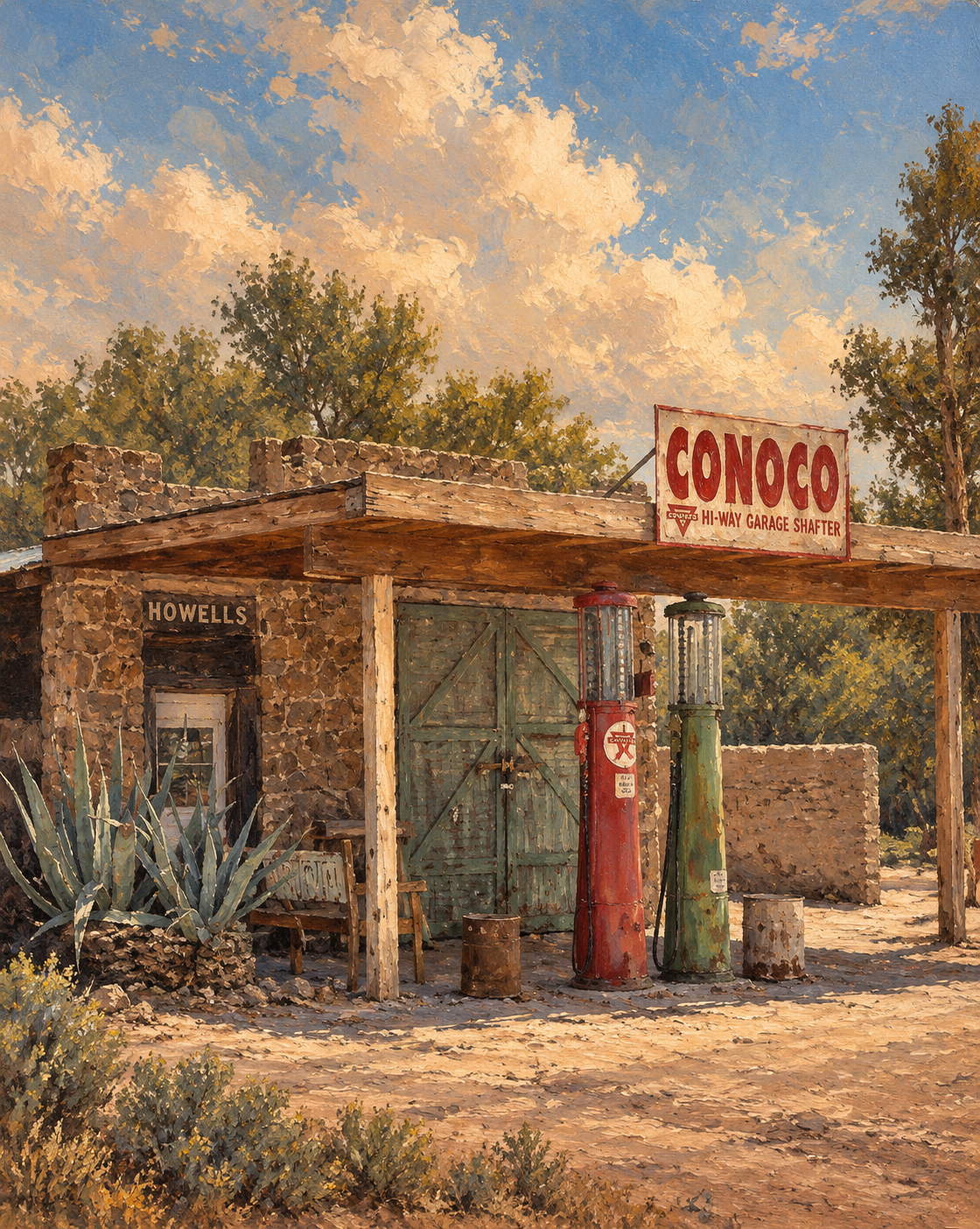
Shafter, Texas
We are the storytellers, the dreamers, the keepers of a little West Texas magic.
You are the wanderers, the artists, the boot-scootin' believers in roads less traveled and a history worth preserving.
Together, we are breathing new life into an old silver town. We are weathered adobe walls, dusty boots on wooden floors, the strum of a guitar drifting into the desert night. We are Sotol poured slow, stories told tall, the smell of mesquite in the evening air. We are art, music, laughter, and the kind of unexpected magic that makes you forget what time it is.
Once upon a time, they came looking for silver, but alas, there is a different treasure to now be found.
Our little corner of the Chinati Mountains is a love letter to the past and an invitation to the future. Through thoughtful restoration, local artistry, good music, and a healthy appreciation for the beautifully unconventional, we're bringing new energy to a place with a story worth telling.
Not to reinvent Shafter. Not to polish away its character. But to celebrate every crooked corner, every weathered wall, every chapter that came before us.
We believe the best places aren't manufactured. They're discovered, remembered, and loved back to life.
Our hope is to inspire you—the locals, the legends, the artists, the historians, and the occasional well-dressed troublemaker.
We want you to wander in—
get.a.little.lost
We want you to stay awhile—
sip.sway.sleep
And when the last song plays, we want you to leave with a story—
worth.telling.twice
Shafter, Texas.
The silver's in our past. The new memories are in our future.
See you soon.
Kat @ Little Motels
Why Me?
An unconventional trajectory. A rather consistent destination.
Hank, you mentioned that you typically look for a traditional trajectory on a résumé. And I suspect, looking at mine, you may have wondered exactly where that trajectory was headed.
Fair enough.
My path has been anything but traditional. But there has always been a trajectory. It just happens to have taken the scenic route.
Some of my earliest work took me to New Orleans in the aftermath of Hurricane Katrina, where I helped rebuild homes and, perhaps more importantly, rebuild a little trust. At the time, unscrupulous contractors were taking homeowners' FEMA money and disappearing. I worked as a liaison between homeowners and builders, helping protect their funds while supplementing projects with our own labor to stretch already limited budgets. It was an education in resourcefulness, accountability, and the importance of doing right by people.
Not long after, I found myself working at an eco-lodge in Las Galeras, Dominican Republic, a place the locals affectionately referred to as the end of the world. Back then, getting there was no small undertaking. The roads were questionable, the reputation even more so, and the guest list consisted primarily of the exceptionally adventurous, with the occasional undercover DEA agent thrown in for good measure.
Naturally, I loved it.
Over the next several years, I traveled, worked, traveled some more, and found myself moving between the Dominican Republic, Haiti, Mexico, Puerto Rico, and the United States. Somewhere along the way, I discovered that the places I loved most were almost always the ones that required a little extra effort to reach.
Pie Town, New Mexico. (Ever been? You should.) Truth or Consequences. Moab before everyone discovered Moab. Marfa before everyone discovered Marfa. Comfort, Texas. Dauphin Island, Alabama. Bonners Ferry, Idaho. Isla Culebra, Merida, Mexican Hat, Tubac, Tepoztlan. And a little off-grid adobe in Terlingua that I've been returning to for thirteen years.
I have a particular affection for the remote, the overlooked, the beautifully imperfect, and the places that haven't quite figured out they're special yet.
In 2009, I tucked myself back into Washington, DC, to start a family. I moved into real estate, where I was fortunate to develop relationships that led me into working primarily with embassies. It was fascinating work, but that little travel bug never really went away.
Eventually, I found my way back to hotels. Initially, I thought I'd sell them. Instead, I fell into hotel management and development, and discovered that I loved the work far more than I ever expected.
I loved the buildings, the personalities, the possibilities. I loved taking something with good bones and an interesting past and imagining what it might become. And I loved that hospitality, when done thoughtfully, could turn a physical space into an experience people carried home with them.
I eventually started my own company, in part because it gave me the freedom to choose projects that genuinely spoke to me, and in part because it allowed me to build a career around raising my two boys.
That freedom has led to a rather eclectic collection of experiences.
I've renovated historic structures, including a 120-unit project in Los Angeles. I've renovated, developed, and managed boutique hotels and short-term rentals. I've worked with properties in various stages of disrepair, reinvention, and rediscovery. And I've been fortunate to collaborate with people who believed, as I do, that the most interesting projects aren't necessarily the easiest ones.
One project in particular feels especially relevant to Shafter.
The Sonoran Desert Inn, a nonprofit hospitality project in a former copper-mining town on the Arizona–Mexico border. A hotel, a general store, gallery space, a community kitchen, and a larger vision for what hospitality could contribute to a small, historically significant community.
Sound familiar?
That experience offered invaluable lessons about the relationship between hospitality, preservation, local identity, and community. About creating something that attracts visitors without losing sight of the people and history that make a place worth visiting in the first place. About the operational realities of ambitious projects in remote locations, where creativity and resourcefulness aren't optional.
There are lessons from that experience I would be particularly excited to bring to Shafter.
Last year, I ventured into something a little outside my usual world: RVs.
And I'll tell you, I didn't love it.
For a variety of reasons, it wasn't where I belonged. But sometimes discovering what you don't love is just as valuable as discovering what you do.
It reinforced something I've always known about myself.
I value quality over quantity. I care about the details that other people might overlook. I love creating exceptional experiences, the unexpected little moments, the thoughtful touches, the conversation pieces that turn an ordinary stay into a story someone tells years later.
I don't want to create something simply because it can be replicated a hundred times over.
I want to create something because it couldn't exist quite the same way anywhere else.
And that brings me to Shafter.
A former silver-mining town, tucked into the West Texas desert, with a remarkable history, a collection of buildings worth preserving, and an opportunity to create something that feels entirely authentic to its surroundings.
It's precisely the kind of place I've been drawn to my entire adult life.
But there's a difference between falling in love with the idea of a place and knowing what it takes to bring that idea to life.
I've spent years navigating that difference. Working with old buildings and limited budgets, finding creative solutions to unexpected problems, balancing the romance of preservation with the realities of operations, and learning that sometimes the smallest details make the biggest difference.
I know how to see the possibilities in a place without losing sight of the practicalities. I know that a beautiful concept means very little if it can't sustain itself. And perhaps most importantly, I understand that a project like Shafter isn't about imposing a vision on a town. It's about recognizing what's already extraordinary and building something worthy of it.
I don't think Shafter needs someone to make it into the next Marfa. I think it needs people who understand why it shouldn't be.
Someone who appreciates the history, understands the business, respects the community, and knows how to create an experience that feels as though it could only exist right there.
That's the work I love. And it's the work I've been doing, in one form or another, for most of my career.
So, no, my résumé may not follow a traditional trajectory.
But when I look back at the places I've been, the projects I've chosen, the people I've worked with, and the things I've learned along the way, I see a remarkably consistent story.
I've spent much of my life finding my way to places like Shafter.
It seems only fitting that all those roads might have been leading here.
From Vision to Reality
Thoughtful development. Practical execution. Long-term sustainability.
What I bring to Shafter is a combination of development experience, hospitality operations, creative problem-solving, and an understanding of what makes unconventional destinations successful.
Having worked on both the development and operational sides of hospitality, I understand how early decisions affect long-term performance. I can evaluate a property's potential while considering renovation costs, operational requirements, revenue opportunities, and financial sustainability.
My approach is practical and deliberate: prioritize investments, maximize existing resources, phase development strategically, and ensure each component contributes to the success of the larger project.
I also recognize that Shafter's history and character are its greatest assets. The objective isn't to manufacture a destination, but to develop one thoughtfully, preserving what makes it distinctive while creating a commercially viable experience.
Ultimately, what I offer is the ability to translate your vision into an actionable plan, oversee its execution, and help establish an operation designed for long-term success. Preserving Shafter’s future means creating something that can sustain itself financially and operationally, ensuring its continued vitality for generations to come.

2025
123 Demo Street New York, NY 12345
Smart Warehouse Retrofit →
“Their strategic framework aligned our disparate processes and produced measurable gains within one quarter.”
-- Recent ClientInitiate a Productive Dialogue
Complete the form with contextual information regarding your challenges, timelines, and desired outcomes, and our team will respond promptly with an evidence-based recommendation framework.